Ten or fifteen years ago I read a book about the philosophy of Stoicism called A Guide to the Good Life. The author gave the impression of being a slightly crotchety and cantankerous old guy who was probably pretty insufferable to be around in person. (I could be wrong; he could be absolutely lovely.) But he did coin a great term–misliving. He used it to describe living the wrong way, making the wrong kinds of decisions in one’s life, and as a result, living a bad life. He said the purpose of philosophy, and Stoicism specifically, was to try to avoid misliving.
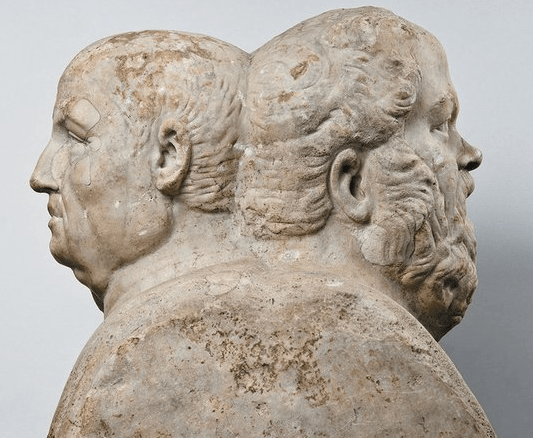
I agree that that’s a good purpose for philosophical practice to set for itself. But my first reaction when I read this book, so many years ago, was to be really amused–delighted even–by this concept. And for many years afterwards, my friend Zara–an actual, real-life stoic, right up to her death–would frequently exclaim, “I mislived!” to one another when one of us made a mistake or did something dumb. It’s one of those words we shared as part of our own private language, grown over the course of a more-than-two decades-long friendship, that I now find myself saying alone.
On mourning: It can be crushing to have to realize, over and over, that the person with whom you share a secret language isn’t here to hear these things anymore. And also comforting, that your friendship and language survive in some form even now, after they’re gone.
The idea of misliving is a funny and worthwhile concept to me now, though, because it implies there is actually a way to not mislive: a way to live correctly, or optimally. I’ve learned that there are, clearly, better and worse decisions, and paths in life that yield more, and less, meaning and purpose and joy. (My own life has been mostly made up of decisions that fall into the “misliving” category, punctuated by a few rare, beautiful lapses into accidental wisdom.) But there is no optimal, effective, streamlined or frictionless life, despite what productivity culture, spiritual teachers and self-help writers want you to believe. Because life itself–being alive–is literally and by definition the opposite of all those things: it’s messy, choppy, pointless, unpredictable, uncontrollable–full of chaos, conflict and suffering. And while there are better and worse paths to take, there is no clearly right one, and no clearly wrong one. Life is morally non-binary.
I’ve met a lot of people in my life–some of them beautiful people in their way, but many of them deeply avoidant and uptight in a way that was hard for them to see, and hard for me to articulate–who wanted to believe, and to convince others, that there was nothing wrong with them: that they had no faults or insecurities. And when I was vulnerable enough to share my own insecurities and self-doubts with them, they became incredibly embarrassed: like they couldn’t believe I was sharing, shamelessly, the things I questioned or even openly disliked about myself. And all the really interesting, deep and kind people I know have lots of things they don’t like about their lives and even themselves: they admit openly and regularly to their shortcomings, their failures, all the ways they’ve mislived and continue to mislive. Which isn’t to say that they also didn’t deep and rich self-love and self-acceptance. That love and acceptance of self was just big enough to hold all the less-than-ideal parts, all the things they hadn’t yet figured out how to fix, or the things for which there was no fix except for love and acceptance.
Admitting to imperfection is powerful, because when you admit to and accept it, in a way, you own it. You say, “I am still a decent and worthwhile person despite all of these failures and flaws, which I fully avow.” On the other hand, to not be able to admit to all the things that might make you unhappy about yourself and your life is what’s truly sad, because, at the end of the day, you’re not fooling anyone–except yourself. There is no possibility of not-misliving. Because you are human. And because you are alive.
So go ahead and let yourself mislive–let yourself be a person who not only makes mistakes, who not only admits openly to making them, but even one who holds them up to the light, to other people: one who celebrates them. I think that in the light your mistakes become transformed, redeemed, and your understanding broadens to take them into your idea of what a good life is.
Besides, what other option is there for humans who want to be true?
 misliving
Leave a comment